 By
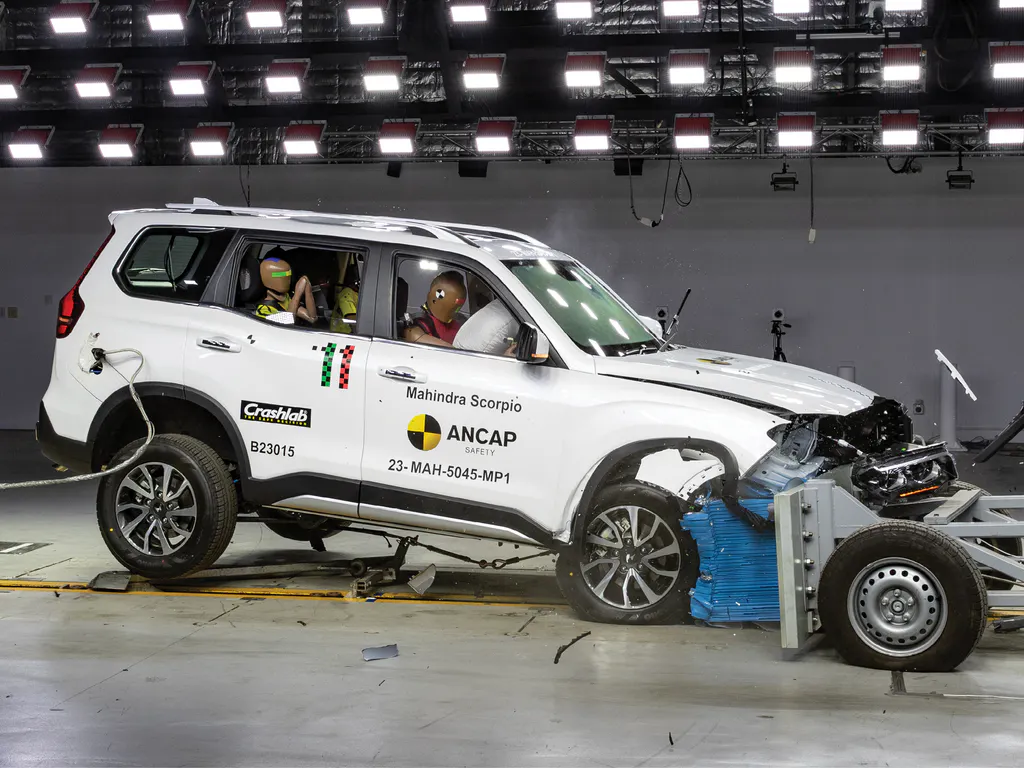
Mahindra Scorpio N recently faced a significant setback in the Australian New Car Assessment Program (ANCAP), scoring a disappointing zero-star rating. The comprehensive evaluation revealed a concerning safety profile for the SUV, with critical shortcomings across various parameters. In the adult occupant protection category, the Scorpio N managed only a 44% score, indicating substantial vulnerabilities in safeguarding occupants during a collision. Child occupant safety, while comparatively better at 80%, still fell short of the desired standards. The most alarming aspect was the 0% Safety Assist score, resulting in an overall test failure.
Analyzing the individual tests sheds light on specific weaknesses. In the front offset test, the passenger compartment remained stable, and protection of the driver’s chest and lower legs was adequate. However, the SUV earned a weak rating for the driver’s chest in the full-width frontal test and exhibited poor protection for the rear passenger’s head, neck, and chest. The side impact test presented a mixed bag of results. While critical body regions of the driver received good protection, a concerning observation surfaced: the driver’s seatbelt was unlatched during the impact, heightening the risk of potential injury.


The oblique pole test highlighted marginal chest protection for the driver but good protection for other critical body regions. Child occupant safety, too, had its shortcomings. The 10-year-old child dummy in the frontal offset test experienced marginal protection for the neck and chest. However, both child dummies fared well in the side impact test. Despite featuring dual frontal, side chest-protecting, and side head-protecting airbags, the Scorpio N lacks crucial safety technologies. The absence of an Autonomous Emergency Braking (AEB) system and a lane support system contributes to the dismal Safety Assist score, emphasizing the need for comprehensive safety upgrades in future Scorpio models.