 By
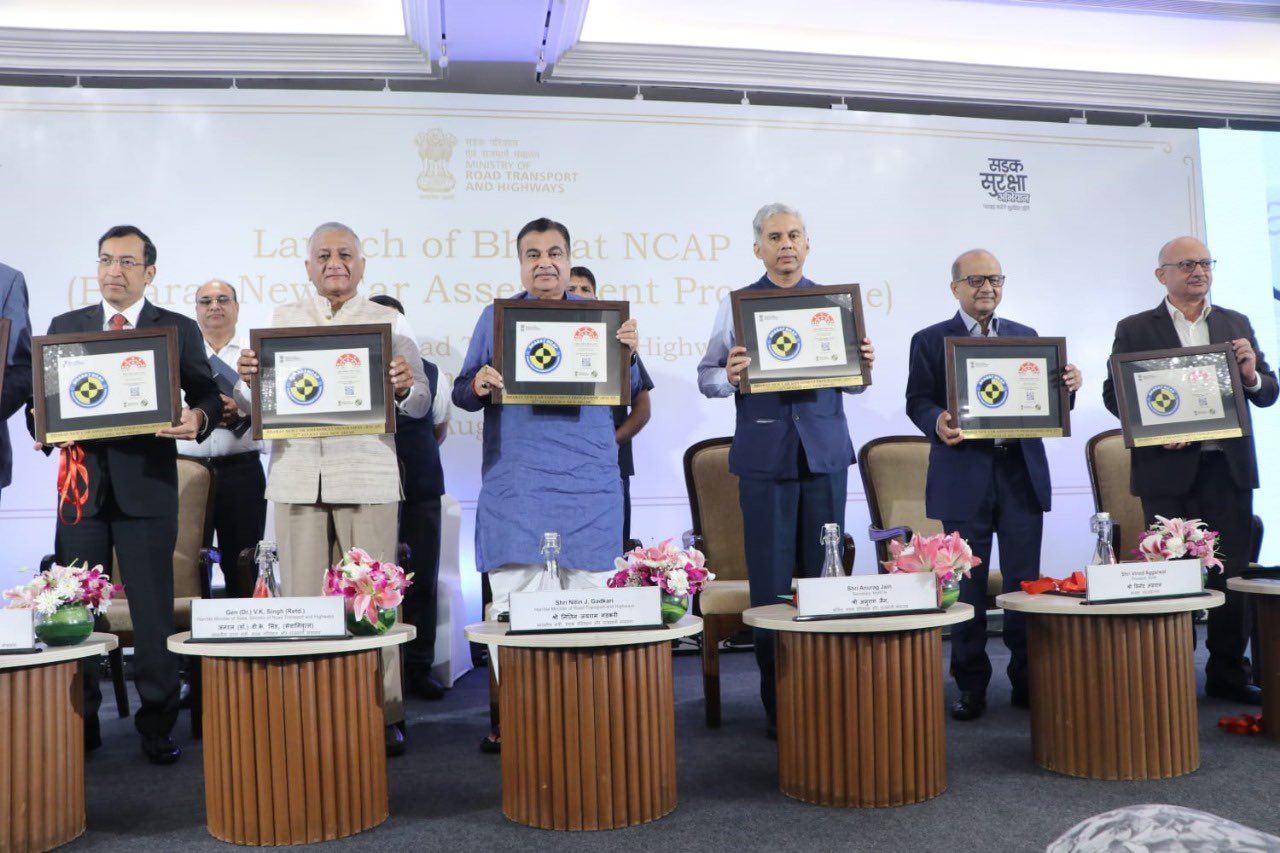
In a groundbreaking stride towards enhancing road safety, the Global New Car Assessment Programme (Global NCAP) in collaboration with India’s Ministry of Road Transport and Highways (MoRTH) has officially unveiled the Bharat NCAP crash test ratings. This monumental announcement ushers in a new era of vehicular safety, with the program slated to take effect from October 1, 2023. India will thus proudly join the ranks of just a handful of nations worldwide to have their own dedicated car crash test rating system.
The development, announced by Union Minister Nitin Gadkari, represents a significant step forward for the Indian automotive industry. Gadkari not only expressed his contentment over the industry’s embrace of the program but also highlighted the government’s simultaneous focus on addressing road engineering challenges. Under the Bharat NCAP initiative, more than 30 car models have already volunteered to undergo rigorous crash tests, signalling an enthusiastic response from manufacturers. Cars that successfully meet the safety standards will proudly bear the Bharat NCAP logo, accompanied by a sticker indicating their respective safety ratings.

What’s particularly notable is the cost efficiency of the Bharat NCAP program, which stands at around Rs 60 lakh for testing a single car. By contrast, a comparable test conducted overseas could cost as much as Rs 2.5 crore. This cost-effectiveness showcases the program’s commitment to driving safety improvements while keeping expenses manageable. David Ward, the executive director of Global NCAP and President of the Towards Zero Foundation (TZF), commended India’s remarkable progress in the realm of automotive safety systems over the last decade.
Among the G20 nations, India has shown the most substantial improvement in implementing safety measures. Aligning with international standards, Bharat NCAP will award cars with star ratings ranging from 1 to 5 based on their performance in crash tests, encompassing both adult and child occupants. Crucial parameters for the star rating encompass an array of factors such as pedestrian-friendly design, structural safety, active and passive safety assist technologies, and occupant safety. While the program mandates seat belt reminders for front-row passengers, there’s a call for extending this to the rear row to further bolster passenger safety.
The Bharat NCAP crash test program adheres to the Automotive Industry Standard AIS 197, targeting vehicles of the M1 category, including those with combustion engines, CNG, and electric variants. With this comprehensive approach, Bharat NCAP is set to foster a culture of safety consciousness among automakers and consumers alike, ensuring a safer future on Indian roads. As the testing phase kicks off on October 1st, anticipation is high for the impact Bharat NCAP will make on the country’s automotive landscape.